Fix Your Coffee
Over Extracted Coffee vs Under Extracted: The Fix Chart
Over extracted coffee tastes harsh and drying, under extracted tastes sharp and thin. Grind, heat, time and ratio move the cup either way.
Sections10
- What coffee extraction actually is
- What over extracted coffee tastes like
- What under extracted coffee tastes like
- The four levers that move extraction
- How to fix over extracted coffee
- How to fix under extracted coffee
- When a cup is both harsh and sharp
- A coffee extraction chart you can read from your tongue
- Extraction targets by brew method
- The verdict on over extracted coffee and under extracted coffee
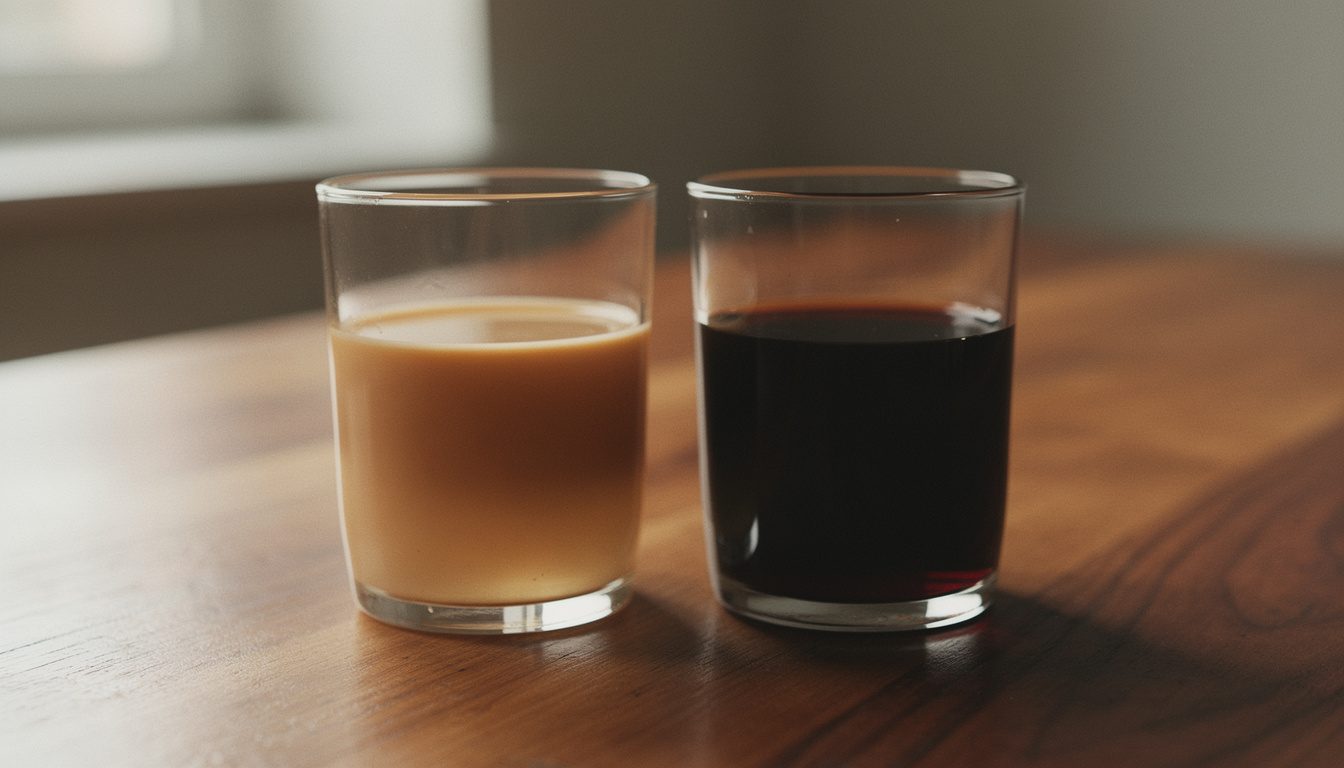
Two cups can come from the same bag of beans and taste like different drinks. One is sharp, thin and gone in a second. The other is harsh, drying and hangs around your mouth. Over extracted coffee and under extracted coffee are the two ends of one scale, and almost every bad cup you brew at home sits somewhere on it.
The scale itself is simple. Water dissolves flavour out of ground coffee, and it does that in a fixed order. Where you stop decides what the cup tastes like. Once you can name which end you landed on, the fix is obvious and it is usually free.
Over extracted coffee is harsh, drying and hollow, and it means the water pulled too much out. Under extracted coffee is sharp and thin, and it means the water stopped too soon. Four levers move the cup either way: grind size, water temperature, contact time and ratio. Change one per brew, taste, and repeat until the sweetness arrives.
What coffee extraction actually is
Extraction is everything the water takes out of the grounds. Roughly a third of a coffee bean will dissolve in water at all, and published practice puts the tasty window at around 18 to 22 percent of the bean's weight.
The order matters more than the number. Salts and bright acids come out first, which is why an early brew tastes sharp. Sugars, caramel notes and body follow, and that middle stage is where good coffee lives. Dry, woody, ashy compounds come out last.
So a brew is a decision about where to stop. Too early and you have only the front of that sequence. Too late and the last stage swamps the sweetness that came before it. The whole craft is landing in the middle on purpose.
What over extracted coffee tastes like
The word most people reach for is bitter, but astringency is the better clue. Over extracted coffee dries your mouth out, a bit like strong stewed tea, and the feeling builds towards the end of the sip.
Flavour also flattens. Whatever the bag promised, blueberry, chocolate, orange, disappears into a general roasty taste. The cup feels hollow rather than round, and the finish is long in an unpleasant way.
Four things get you there: a grind that is too fine, water that is too hot, contact time that is too long, and too much of the bean dissolved into too little water. The full walkthrough for filter brewing lives in why coffee tastes bitter.
What under extracted coffee tastes like
Under extraction is sharp and puckering at the front of the tongue, closer to lemon juice or under-ripe fruit than to brightness you would enjoy. Some people describe it as salty.
The body is the giveaway. An under extracted cup feels thin and watery, and the flavour vanishes almost immediately after you swallow, with no sweetness holding the middle together.
The causes mirror over extraction exactly: too coarse a grind, water that is too cool, a brew that ends too soon, or too much coffee for the water available. Sour coffee covers the diagnosis in detail, including the difference between sourness and the acidity you actually want.
The four levers that move extraction
Everything you can change comes down to four controls, and they all push in the same direction on the same scale.
- Grind size. Finer means more surface area and more extraction. Coarser means less.
- Water temperature. The hot brewing range is 195 to 205 F (90 to 96 C). Hotter extracts faster, cooler extracts slower.
- Contact time. Longer means more extraction. Shorter means less.
- Ratio. The drip and pour over range is 1:15 to 1:17 by weight, with 1:16 as the balanced default, about 60 g of coffee per litre of water.
Grind is the strongest lever and the one to reach for first. Temperature and time are useful second moves. Ratio changes strength as much as extraction, so it is better treated as a taste preference once the other three are settled.
The most useful rule is boring: change one lever per brew. Two changes at once and you have learned nothing about either.
How to fix over extracted coffee
Work down this list, one change per brew, and stop as soon as the cup tastes sweet.
- Grind one step coarser and brew the same recipe again.
- Let boiled water rest 30 to 45 seconds before pouring.
- Shorten the brew, and decant immediately so the coffee stops sitting on the grounds.
- Never leave a carafe on a hot plate, since that keeps cooking the coffee.
- Check the ratio against 1:16 rather than scooping by eye.
Most harsh cups are fixed at step one. If you have been through all five and it is still drying, look at your gear and your beans instead, because rancid oil in a dirty basket and a very dark roast both taste harsh at a perfectly correct extraction.
How to fix under extracted coffee
Same list, reversed. One change per brew.
- Grind one step finer.
- Use hotter water, and preheat the dripper, carafe and mug.
- Give the brew more time, with slower pours rather than one long steep.
- Wet all the grounds evenly at the start so nothing stays dry.
- Rest very fresh beans a few days, and treat light roasts as their own recipe.
As an Amazon Associate, this website earns from qualifying purchases.
A burr grinder is what makes any of this repeatable. Blade grinders produce dust and boulders in the same batch, so half your coffee over extracts while the other half under extracts, and no single adjustment can fix both at once.
When a cup is both harsh and sharp
Some cups arrive sour at the front, hollow in the middle and drying at the finish. That is not a point on the scale. It is uneven extraction, where water raced through part of the coffee bed and crawled through the rest, so both faults happen in the same brew.
The causes are physical rather than thermal. Clumped grounds, a dry patch, an uneven bed, or a heavy first pour that punches a hole straight through. On an espresso machine this has its own name, channeling, and the cure there is puck preparation rather than any change to grind or temperature.
On filter coffee the cure is even wetting. Bloom the grounds with a small pour, let them degas for about 30 seconds, then pour in slow circles that keep the whole bed submerged rather than hammering one spot.
A coffee extraction chart you can read from your tongue
You do not need a refractometer. Match what you taste to a direction and move.
- Sharp, thin, short finish: under extracted. Go finer, hotter, longer.
- Sweet, round, clear flavour, finish that lasts: you are in the window. Change nothing.
- Harsh, drying, flat, long unpleasant finish: over extracted. Go coarser, cooler, shorter.
- Sharp and harsh together with a hollow middle: uneven. Fix distribution, not temperature.
- Flat, dull and papery with no sharpness or harshness: stale beans. No setting will fix it.
Every one of those rows, plus the ratio, dose and grind starting points for each brew method, is on the free BrewChart Card, which is built to live on a fridge door.
Extraction targets by brew method
Each method has its own window, and the numbers below are the published starting points to dial from.
- Drip and pour over: 1:15 to 1:17, default 1:16, medium grind, water at 195 to 205 F, roughly two and a half to three and a half minutes.
- French press: 1:12 to 1:15, default 1:14, coarse grind, about four minutes, then decant everything at once.
- Espresso: about 1:2 dose in to beverage out, so 18 g dry gives around 36 g in the cup, in roughly 25 to 30 seconds.
- Cold brew: 1:4 to 1:5 for concentrate to dilute later, or about 1:8 ready to drink, coarse grind, 12 to 18 hours.
Weighing beats measuring by volume, because ground coffee settles differently every time. One level tablespoon is about 5 g and a standard scoop is two tablespoons at about 10 g, but those are estimates. A kitchen scale that reads to 0.1 g turns all of these into repeatable recipes. Side by side versions of these numbers live in the brew charts.
The verdict on over extracted coffee and under extracted coffee
Over extracted coffee is harsh and drying, under extracted coffee is sharp and thin, and both are the same problem measured from opposite ends. Name the taste first, then move one lever.
Grind size does most of the work. Coarser to back off, finer to push further, one step at a time, tasting after every change. Temperature and time are the follow-ups, and ratio is where you set strength once the flavour is already sweet.
If a cup is both harsh and sharp at once, stop adjusting settings entirely, because the coffee bed is extracting unevenly and only better distribution will fix it. And if the cup is simply flat, with neither fault present, check the roast date before you touch anything, since no lever brings stale coffee back.
Quick answers
What does over extracted coffee taste like?
Harsh, dry and hollow. The bitterness builds through the sip and leaves your tongue feeling scraped, a sensation called astringency. Flavours read as flat and roasty rather than sweet, and the finish lingers in a way you would rather it did not. Very dark cups often smell smoky too.
What is the difference between over extracted and just too strong?
Strength is how much coffee is dissolved in the water. Extraction is how much came out of each gram of grounds. A strong cup can still be sweet and balanced, and you fix it by adding water. An over extracted cup tastes harsh at any strength.
Can I fix over extracted coffee after brewing?
Not really. You cannot put the harsh compounds back into the grounds. Diluting with hot water softens it and a tiny pinch of salt masks the edge, but both are rescues rather than repairs. Change the grind and brew again for a cup that actually tastes right.
Is bitter coffee always over extracted?
No. Rancid oils in a dirty basket, stale beans and a very dark roast all read as harsh at a perfectly normal extraction. Clean the gear and check the roast date first. If a fresh bag brewed in clean equipment is still harsh, then extraction is the culprit.
How do I know which way to move without a refractometer?
Your tongue is enough. Sharp, thin and short means pull more out with a finer grind, hotter water or a longer brew. Harsh, drying and hollow means back off. Change one thing per brew and the direction becomes obvious within two attempts.
Does roast level change the extraction target?
It changes how easily coffee gives itself up. Darker roasts are more porous and extract faster, so they need coarser, cooler and shorter settings. Light roasts are dense and hold on, so they want finer, hotter and longer. The same recipe across both roasts will miss one of them.